 Mathew K Analytics
FastAPI deep dive
A free 18-lesson course. Every lesson has a video walkthrough and a Jupyter notebook you can download or open in Google Colab. Tools covered: FastAPI, Pydantic, datetime, SQLAlchemy, asyncio, pytest.
- Lessons18
- Videoabout 3 hours
- LevelIntermediate
- PriceFree
About this course
FastAPI deep dive is a free intermediate course with 18 video lessons (about 3 hours of video in total). It starts with “FastAPI Tutorial #1: Getting Started — Build Your First Python API” and finishes with “FastAPI Tutorial #18: Capstone — Production-Ready API”. Every lesson comes with the exact Jupyter notebook used in the video, so you can run every step yourself.
Along the way you'll use FastAPI, Pydantic, datetime, SQLAlchemy, asyncio and pytest.
It suits learners who already know basic Python (variables, lists, loops and functions) and want to apply it to real problems.
Course outline
- FastAPI Tutorial #1: Getting Started — Build Your First Python API – On building real, production-shaped APIs with FastAPI. The FastAPI app, path operations, uvicorn, and the automatic interactive docs.…
- FastAPI Tutorial #3: Request Bodies & Pydantic Models – Real, validated, self-documenting request bodies. BaseModel, nested models, and combining a body with path and query parameters. Let's get…
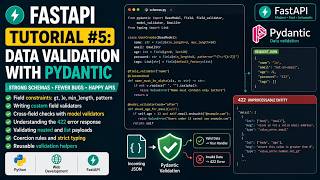
- FastAPI Tutorial #5: Data Validation with Pydantic – Constraining and validating data far beyond a plain type hint. Field, Query, Path constraints, custom validators, and reading validation…
- FastAPI Tutorial #7: Dependency Injection with Depends() – Sharing logic across endpoints the FastAPI way. Depends, dependencies with parameters, yield-based setup and teardown, and overriding for…
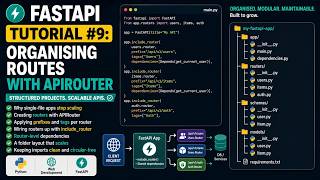
- FastAPI Tutorial #9: Organising Routes with APIRouter – Splitting one giant app across organized, reusable pieces. APIRouter, includerouter, shared prefixes, tags, and router-level dependencies.…
- FastAPI Tutorial #11: Error Handling & Custom Exceptions – Turning failures into consistent, useful responses. HTTPException recap, custom exception classes, and overriding the built-in error…
- FastAPI Tutorial #13: JWT Authentication End to End – Stateless, portable tokens instead of an in-memory map. Encoding and decoding JWTs, expiry, signature tampering, and protecting routes…
- FastAPI Tutorial #15: Async & Background Tasks – Async def handlers and work that runs after the response. When to use async def, why blocking calls inside it are dangerous, and…
All 18 lessons
 13 min
FastAPI Tutorial #1: Getting Started — Build Your First Python API
 14 min
FastAPI Tutorial #2: Path & Query Parameters Explained
 15 min
FastAPI Tutorial #3: Request Bodies & Pydantic Models
 16 min
FastAPI Tutorial #4: Response Models & HTTP Status Codes
 17 min
FastAPI Tutorial #5: Data Validation with Pydantic
 17 min
FastAPI Tutorial #6: Path Operation Configuration & Better Docs
 17 min
FastAPI Tutorial #7: Dependency Injection with Depends()
 17 min
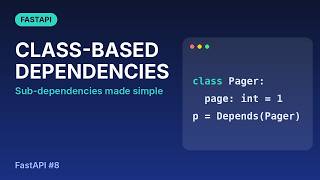
FastAPI Tutorial #8: Class-Based & Sub-Dependencies
 16 min
FastAPI Tutorial #9: Organising Routes with APIRouter
 17 min
FastAPI Tutorial #10: Middleware & CORS Setup
 18 min
FastAPI Tutorial #11: Error Handling & Custom Exceptions
 16 min
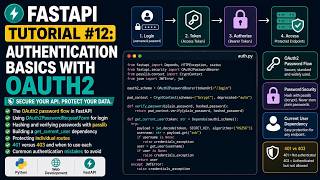
FastAPI Tutorial #12: Authentication Basics with OAuth2
 16 min
FastAPI Tutorial #13: JWT Authentication End to End

FastAPI Tutorial #14: Databases with SQLAlchemy
FastAPI Tutorial #15: Async & Background Tasks

FastAPI Tutorial #16: Real-Time WebSockets

FastAPI Tutorial #17: Testing FastAPI Apps with pytest

FastAPI Tutorial #18: Capstone — Production-Ready API
Frequently asked questions
Is the FastAPI deep dive course free?
Yes. All 18 videos, notebooks are free, with no sign-up.
Do I need to install anything?
No. You can open each notebook in Google Colab in your browser, or download it and run it in Jupyter or VS Code with Anaconda installed.
How long does the FastAPI deep dive course take?
The videos add up to about 3 hours. Most learners take one to two lessons a day, so plan on 3 to 4 weeks if you code along.
What level is it?
Intermediate. It suits learners who already know basic Python (variables, lists, loops and functions) and want to apply it to real problems.